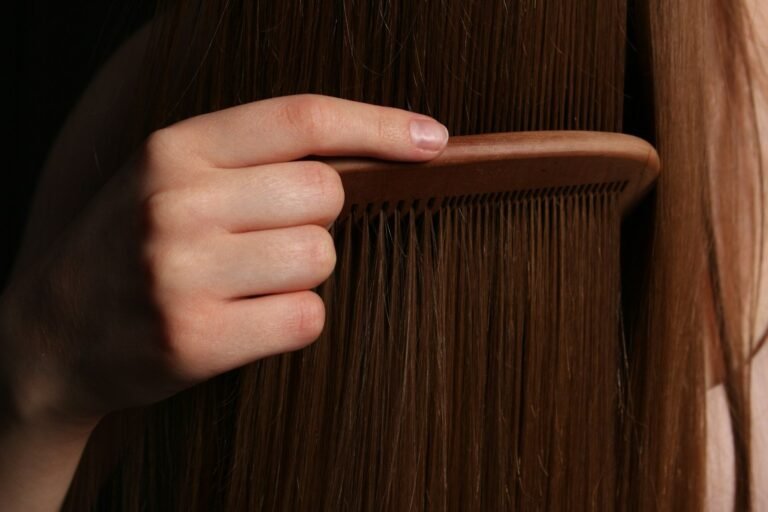
Bangalore Water and Hair Fall: What Hard Water Really Does
Hard borewell and tanker water can leave hair rough and more likely to break, but it is rarely the reason hair falls from the root. What the evidence says, simple fixes, and the signs that point elsewhere.
Almost everyone who moves to the city hears it within a month: the water here makes your hair fall. So does it? The short answer on Bangalore water and hair fall is that hard water can make hair rough, dull and more likely to snap, but there is no good evidence that it damages the follicle or causes true hair loss from the root.
Hard water is mostly a problem for the hair shaft and the skin surface. If hair is coming out from the root in large amounts, or the scalp is showing through, the cause is usually something else, and the water is taking the blame.
What hard water is, and why Bengaluru has so much of it
Water is described as hard when it carries a high load of dissolved mineral salts, mainly calcium and magnesium. These minerals are picked up as water passes through rock and soil, so groundwater tends to be harder than river water.
That matters in Bengaluru because the city does not run on one supply. Some homes receive piped Cauvery river water. Many apartments, particularly in the newer southern and eastern neighbourhoods, depend partly or fully on borewells and private tankers, and tanker water is usually drawn from borewells too. Two buildings on the same road can have very different water, and the mix in one building can change between the monsoon and the summer.
The signs at home are familiar. Soap and shampoo refuse to lather, a white crust forms on taps and shower heads, steel vessels dry with a chalky film, and the geyser element scales up. If your bathroom shows these signs, your hair and skin are meeting the same minerals every day.

Bangalore water and hair fall: what the evidence says
The research here is thinner than the strength of public opinion would suggest, and the two studies quoted most often disagree with each other.
In the first, a small laboratory study in the International Journal of Trichology, researchers collected hair from 15 volunteers, cut each sample in half, and soaked one half in hard water and the other in distilled water on alternate days over a month. They then measured how much force each hair could take before breaking, and how far it stretched. There was no meaningful difference between the two groups.
The second, a later study in the same journal using hair from 70 men, divided each sample into three parts: one untreated, one treated with deionised water and one treated with very hard water. This time the hard-water hair was measurably weaker than the other two, and the authors concluded that hard water reduces hair strength and so increases breakage.
Both studies were small, both used cut hair in a laboratory instead of hair growing on a scalp, and the hardness of the water differed between them. Neither looked at the follicle, and neither counted hairs shed from the root. The fair reading is this: very hard water may weaken the hair fibre and make it break more easily, but nothing in this research shows that it causes hair to fall from the root or stops it growing back.
There is a practical side as well. Minerals react with soap and shampoo to form a residue that does not rinse away easily. That film leaves hair feeling coated, stiff and tangled, and tangled hair breaks when it is combed. A lot of what people describe as hair fall after moving here is this kind of breakage, added to the ordinary daily shedding they had never counted before.
Breakage or true hair loss: how to tell
These are two different problems with different causes, and the fallen hairs themselves usually tell you which one you have.
| What you notice | Breakage (hair shaft) | Shedding or thinning (follicle) |
|---|---|---|
| The fallen hair | Short pieces of different lengths, no bulb at the end | Full-length strands with a small pale bulb at the root |
| How the hair feels | Rough, dry, tangled, frizzy at the ends | Often normal in texture |
| Where it shows | Uneven lengths, flyaways, thin ends | A wider parting, a thinner ponytail, more scalp visible |
| Common causes | Mineral residue, heat styling, bleach, rough combing, tight styles | Illness, low iron, thyroid problems, hormones, stress, family pattern |
| Likely role of water | Possible contributor | Unlikely to be the cause |
True shedding has a long list of better-documented triggers. A fever or infection can set off a delayed fall, which we explain in our piece on hair fall after fever or illness. Childbirth is another, covered in our guide to postpartum hair shedding. A move to a new city often brings several of these together: a new job, disturbed sleep, a changed diet and sometimes a bout of viral fever. The water changes in the same month, so it gets the blame.
Season plays a part too, as our article on monsoon hair fall in Bengaluru describes. And gradual thinning at the crown or parting over years is usually pattern hair loss, which runs in families and has nothing to do with the tap. Where the scalp itself is flaky, itchy or oily, a clinically supervised scalp rejuvenation treatment may be one part of the plan, after the cause has been identified.
What hard water does to skin
The evidence for skin is a little stronger than for hair. In a study of more than 30,000 Danish blood donors published in PLOS One, people living in areas with harder water were more likely to report moderately or severely dry skin, and those in softer-water areas were less likely to. The link held even after people with dermatitis were left out. It was an observational study based on self-reported dryness, so it shows an association and not proof of cause.
The likely explanation is the same residue. Soap that does not rinse off stays on the skin, and people in hard-water homes tend to use more cleanser to get a lather. Both can strip the skin’s protective barrier. The result is tightness after a bath, flaking on the shins and arms, and itching that gets worse in Bengaluru’s dry winter months.
Whether hard water makes eczema worse is less settled, and studies have not agreed. What is reasonable to say is that skin which is already dry or sensitive has less room for error. For darker Indian skin there is one more reason to take dryness seriously: scratching and irritation can leave dark marks that outlast the rash. Persistent dryness, rashes or marks deserve a proper look, and our skin treatments page outlines how concerns like these are assessed.
Simple fixes that are worth trying
None of these needs a large budget, and none is a medical treatment. They reduce contact with minerals and help restore what washing takes away.
| Fix | What it does | Limits |
|---|---|---|
| Final rinse with filtered or drinking water | Washes off mineral and shampoo residue | Needs a mug or two set aside each wash |
| Clarifying or chelating shampoo, used occasionally | Helps lift mineral build-up from the hair shaft | Drying if used at every wash |
| Conditioner on the lengths, every wash | Reduces friction and tangling, so less breakage | Does not change the water |
| Shower filter | May reduce chlorine and sediment | Most do not soften water; minerals largely remain |
| Whole-house or bathroom water softener | Removes calcium and magnesium at the source | Costly, and needs regular upkeep |
A few habits matter as much as products. Use less shampoo and apply it to the scalp, not the lengths. Detangle with a wide-toothed comb, starting from the ends. Keep the water lukewarm, because hot water dries both hair and skin further. For skin, a gentle soap-free cleanser and a plain moisturiser applied within a few minutes of bathing do more than any filter.
Be wary of anything sold as a fix for hair loss caused by water. Oils, serums and supplements marketed this way are answering a question the science has not asked. If these changes make your hair feel smoother and break less, the water was part of the story. If the amount coming out from the root stays the same, look elsewhere.
When shedding needs a scalp assessment instead
Changing the water is a fair first experiment. It should not become the reason an underlying cause goes unexamined for a year. Some signs point away from the tap and towards a proper evaluation:
- Full-length hairs with a bulb, falling in clearly larger numbers than before
- A parting that is widening, or a hairline that is moving back
- Smooth round patches with no hair at all
- A scalp that is red, scaly, painful or very itchy
- Shedding together with tiredness, irregular periods or recent weight change
A personalised assessment usually starts with the history: illness, diet, medicines, family pattern and timing. It then moves to a close look at the scalp, and blood tests where they are relevant. An evidence-based plan depends on which type of hair loss is found, and it can range from correcting a deficiency to treatments discussed in our comparison of GFC and PRP for thinning hair. Not every treatment suits every cause, and some causes settle without any procedure. Knowing which one you have gives you the confidence to stop guessing.
Frequently asked questions
Does Bangalore water cause hair fall?
Hard borewell or tanker water can leave hair rough and more prone to breaking, and one small study found it weakened the hair fibre. There is no good evidence that it causes hair to fall from the root or leads to baldness.
How is hair breakage different from hair loss?
Broken hairs are short, uneven pieces with no bulb at the end, and the damage is in the shaft. Hair loss means full-length strands shed from the follicle, or hairs growing back finer, and it has internal causes.
Will a shower filter stop hair fall from hard water?
Most shower filters reduce chlorine and sediment but do not remove much calcium or magnesium. They may make water feel better, but they will not change shedding that comes from the follicle.
Is hard water bad for skin and eczema?
Harder water has been linked with more dry skin in a large observational study. Its effect on eczema is less clear, but dry or sensitive skin generally does better with gentle cleansers and regular moisturising.
When should I get hair fall checked instead of changing the water?
If you see a widening parting, bald patches, a sore or scaly scalp, or heavy shedding of full-length hairs that continues despite gentler washing, have the scalp assessed. How long recovery takes depends on the cause, and you get a clear estimate in person.
This article is for general education and is not a substitute for an in-person consultation. Treatment suitability depends on your medical history, skin type and current medication. Always speak with a qualified practitioner before starting or stopping any treatment.