Glycolic, lactic and body peels at a strength chosen for how your skin actually behaves — because on melanin-rich skin, the wrong depth creates the very pigmentation you came in to treat.
A chemical peel applies a cosmetic acid at a measured strength for a measured time, lifting away the dulled outer layer so the skin underneath renews faster than it would on its own.
The acid is not the interesting part. Depth is. Glycolic suits surface dullness and congestion, lactic is gentler and better tolerated by dry or reactive skin, and a body formulation is built for the thicker skin of the back, arms and underarms. Which one you need follows from your skin, not from which is strongest.
On Indian and melanin-rich skin this matters more than it does elsewhere. Push a peel deeper than the skin can comfortably recover from and the inflammation that follows can leave darker marks than the ones you arrived with. We would rather run a properly spaced course at a strength your skin tolerates than chase a dramatic peel and then spend the next six months treating the consequence.
The acid breaks the bonds holding dulled surface cells in place, so they shed rather than sitting there scattering light.
Clearing that layer signals the skin beneath to turn over sooner, and that is where the change in tone and clarity comes from.
Strength, contact time and the number of passes are set at each visit against how your skin responded to the last one.
Assessed, planned and supervised in clinic — never sold from a menu.
Strength and contact time are set for your skin, not read off a fixed menu.
Glycolic, lactic or a body formulation, depending on what is actually going on.
Reactive and melanin-rich skin is tested before a full-face peel is performed.
Most peels are done and neutralised inside half an hour.
Spaced and reviewed, because staged renewal is what holds up.
Where a peel is the wrong tool for your concern, we say so at assessment.
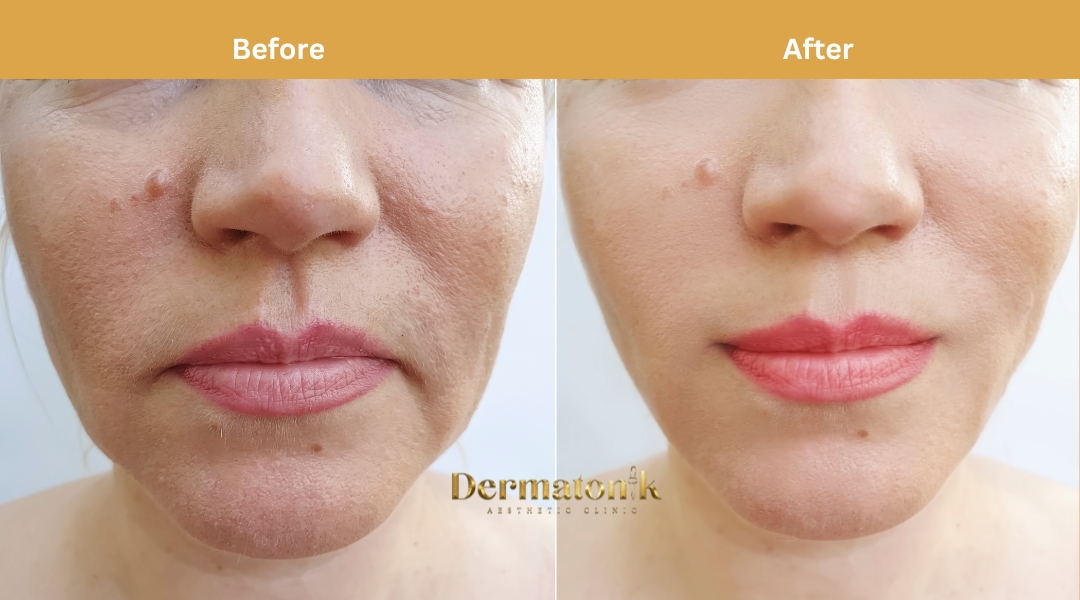
Skin renewal — results shown are from Dermatonik's skin-renewal protocols and may reflect a combination of treatments.
Photographs shared with patient consent. Individual results vary; your clinician will set honest expectations at consultation.
Dr. Saeema Shiraaz examines your skin, asks how it has reacted to exfoliation before, and decides which acid and what strength are appropriate — or whether a peel is the right route at all.
What is appropriate, in what order, and what it will cost is set out before anything begins. You will be told plainly if something is not going to help you.
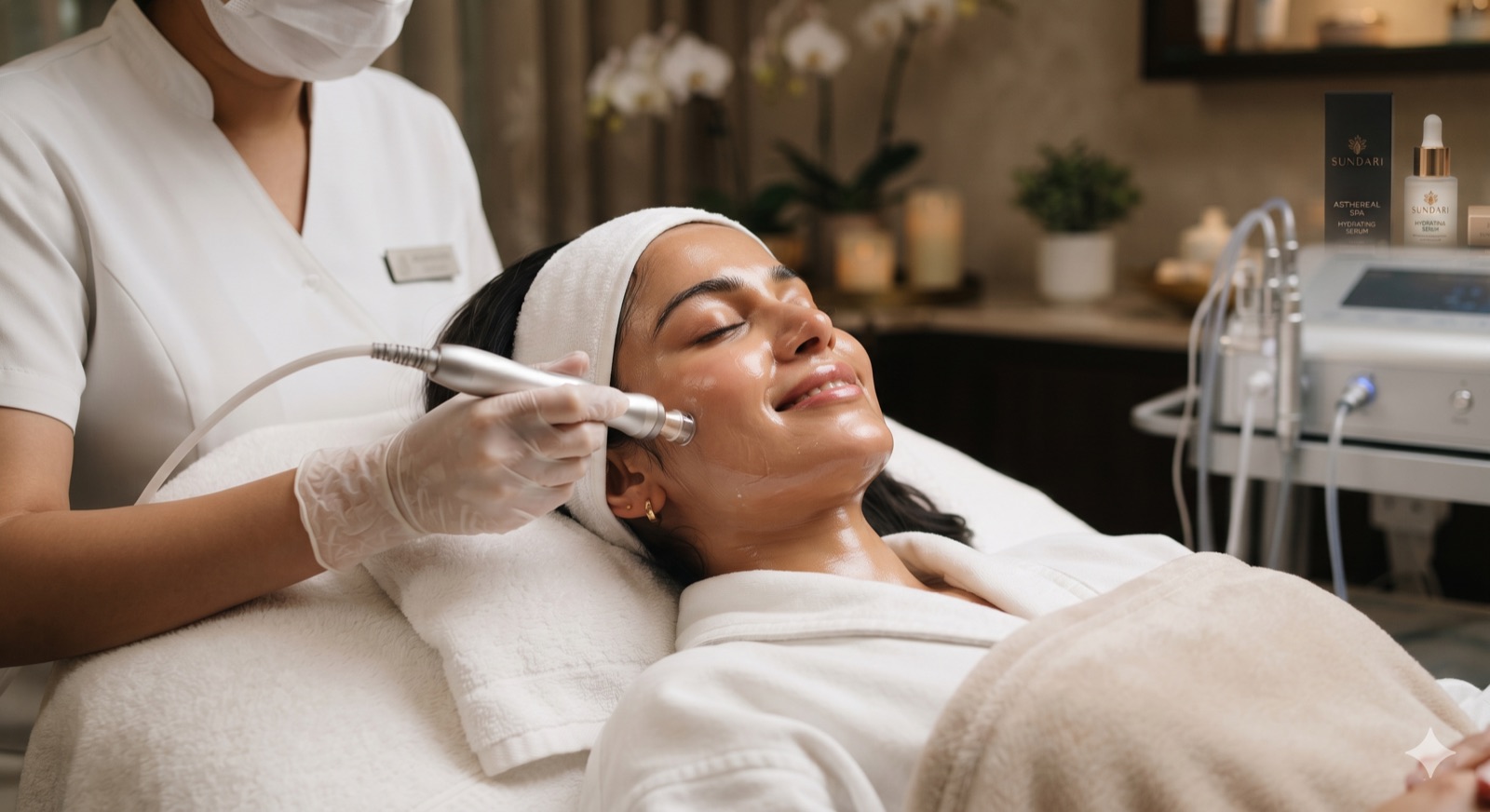
The skin is cleansed and prepped, the peel is applied and timed, then neutralised. You may feel warmth or a light tingling while it is on.
Aftercare is explained before you leave, and we review how your skin has responded before deciding the next step.

Dr. Saeema Shiraaz — cosmetologist, and the reason patients stay. Every treatment plan at Dermatonik is built around her judgement, not a sales target.
Every protocol is planned and supervised by Dr. Saeema Shiraaz — no junior staff experimenting on your skin.
We recommend what works for your skin, not whatever's trending — and we'll say so if a treatment isn't right for you.
Honest timelines, real costs, and no pressure to buy packages you don't need.
On melanin-rich skin, a peel taken deeper than the skin can comfortably recover from can leave darker marks than the ones you came in with. Depth control is the entire craft.
Dermatonik
How we work
What patients usually ask before their first visit.
Often only lightly, and sometimes not at all. Visible sheeting is a function of depth, not of whether the peel worked — superficial peels renew skin without dramatic flaking.
Usually a short course spaced two to four weeks apart, then reviewed. The number depends on your concern and on how your skin responds to the first couple.
Yes, when the acid, the strength and the spacing are chosen for melanin-rich skin and patch-tested first. The risk with deeper skin tones is post-inflammatory pigmentation from an over-aggressive peel, which is exactly what careful depth control avoids.
Most people describe warmth or a light tingling for the few minutes the peel is on. Stronger formulations feel more active, and the timing is adjusted accordingly.
Daily sun protection is not optional after a peel — freshly renewed skin pigments easily. The rest of the aftercare is explained before you leave.
Active infection or broken skin at the site, recent isotretinoin use, pregnancy for some formulations, and skin already inflamed from another treatment. Where a peel is not appropriate for you now, we will say so and revisit it later.
Tell us a little about what you'd like to address. Dr. Saeema Shiraaz will review your message and the team will confirm a time that works for you.
2nd Floor, 1655, 27th Main Road, opp. NIFT College,
1st Sector, HSR Layout, Bengaluru 560102
By appointment — in clinic or online consultation
Continue the conversation there and the team will confirm your slot shortly.