Why SPF Alone Isn’t Protecting Indian Skin From Pigmentation
Two separate problems: the SPF number on Indian labels was never tested the same way twice, and even a perfect SPF says nothing about visible light — the part that drives pigmentation in deeper skin.
Most people in Bengaluru who are serious about pigmentation already use sunscreen. They buy a high number, apply it in the morning, and still watch the same patches darken through the year. The usual conclusion is that the product is not working.
Usually it is working — just not to the number on the label, and not against everything that causes pigmentation. Those are two separate problems, and 2025 gave India a very public lesson in the first one.
What an SPF number on an Indian label used to mean
Until recently, sunscreens sold in India were regulated under the Drugs and Cosmetics Act and the Cosmetic Rules, which set out which UV filters were permitted and at what concentration — but prescribed no standard method for testing the SPF claim itself. Brands could choose: testing on human volunteers, laboratory simulation, or mathematical modelling of the formula.
The consequence is easy to state: one brand’s SPF 50 did not have to behave like another’s. Both numbers were legal. They were not necessarily comparable.
In late 2025 this became a public argument when independently commissioned lab testing, widely reported and just as widely contested, indicated that several popular sunscreens were delivering substantially less protection than claimed. The testing methodology itself was disputed by the brands involved, and it is worth being careful about treating any single round of results as settled fact.
What is not disputed is the outcome: the Bureau of Indian Standards moved to close the gap, introducing a standard that adopts the internationally recognised ISO in-vivo method — SPF measured on human skin, the same way, by everyone. The label is becoming a like-for-like number rather than a marketing choice.
The dose problem nobody mentions on the bottle
Even a perfectly tested SPF 50 assumes something about you that is almost certainly untrue.
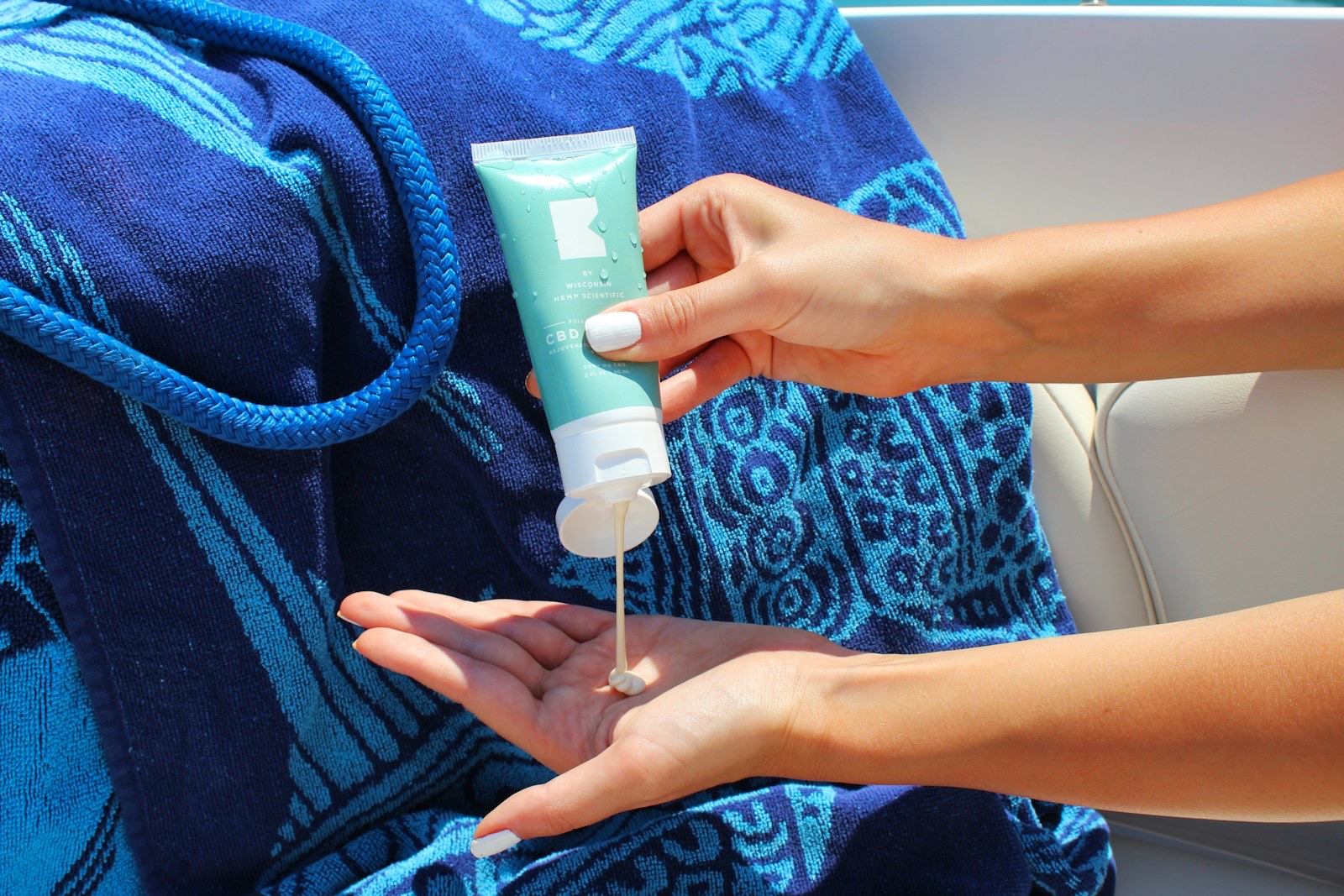
SPF is measured at an application density of 2 mg/cm². That is a thick, visible layer — roughly two finger-lengths of product for the face and neck alone. In real use, people typically apply between a quarter and a half of that amount.
The protection does not fall politely in proportion. In testing on Asian skin, sunscreen applied at 0.5 mg/cm² delivered roughly a quarter of its labelled SPF, and at 1.0 mg/cm² roughly half. A conscientiously applied SPF 50, spread the way most of us actually spread it, is behaving like something in the teens.
The reverse also holds, which is the encouraging part. When sunscreen is applied at the full 2 mg/cm² through a sunny holiday, it prevented sunburn and measurably reduced the biomarkers of UV-induced DNA damage. The product works. The dose is the variable.
The part SPF was never designed to cover
Here is the point that reframes the whole problem for Indian skin.
SPF measures protection against UVB only. The PA rating covers UVA. Neither number says anything at all about visible light — the light you can see, which reaches skin all day, indoors near windows and from screens, and which passes straight through a sunscreen formulated purely for UV.
Visible light is an established driver of pigmentation, and it acts most strongly on darker skin. In deeper phototypes it induces pigmentation that is more intense and longer-lasting than the equivalent UVA exposure — which is precisely why melasma and post-inflammatory marks can keep deepening in someone who is diligent with a high-SPF product.
| What reaches your skin | Measured by | Blocked by a standard UV sunscreen? |
|---|---|---|
| UVB — burning, DNA damage | SPF | Yes |
| UVA — ageing, pigment darkening | PA / UVA-PF | Yes, if broad-spectrum |
| Visible light — pigmentation in deeper skin | Nothing on the label | No — needs a tint |
This is why two people can use the same bottle with genuinely different results. For someone whose main concern is burning, a high SPF is the whole job. For someone whose main concern is pigmentation, it is roughly two-thirds of the job.
What closes the visible-light gap
The evidence here has firmed up considerably, and it points somewhere specific: tinted formulations containing iron oxides. The pigments that provide the tint also absorb visible light, which a clear or purely mineral UV filter does not.
A randomised, investigator-blinded study in melasma patients compared a visible-light-protective tinted sunscreen against an untinted sunscreen of the same SPF through summer. Pigmentation and colour contrast worsened significantly less in the tinted group — the difference was the tint, not the SPF. Earlier work found iron-oxide formulations protected deeper skin phototypes from visible-light-induced pigmentation where an SPF 50+ UV sunscreen could not.
Practically, this means a tinted sunscreen is not a cosmetic preference for anyone managing pigmentation. It is the functional part of the product, and choosing a clear formula for elegance quietly removes the protection that matters most for the concern being treated.
What to actually change
Use markedly more than you think. Roughly two finger-lengths covers face and neck — and the neck is the part most often skipped, which is why it ages ahead of the face. If a bottle lasts you many months, the dose is the problem, not the brand.
Reapply through the day. Morning-only application is a morning-only protection. Every two to three hours matters on days with real outdoor exposure — commutes included. The usual obstacle is makeup, which is worth solving rather than accepting, since a skipped reapplication costs more protection than any product upgrade returns.
Choose a tinted formulation if pigmentation is the concern. Look for iron oxides in the ingredient list rather than the word “tinted” on the front.
Do not treat sunscreen as the whole plan. Shade, timing, a wide-brimmed hat and sunglasses do work that no bottle does, and they cost nothing.
Check the claim now that it means something. As the in-vivo standard takes effect, an SPF number backed by the recognised test method is a materially better bet than one that is not.

Why this matters more here than in most places
Bengaluru sits near 13° north at roughly 900 metres. UV exposure is meaningful year-round, not seasonal, and altitude adds to it. There is no winter in which the problem politely pauses, which is why pigmentation management here is a continuous discipline rather than a summer one.
Add to that the pattern we see in clinic: patients arriving with a shelf of expensive brightening products and no consistent photoprotection underneath. Pigment treatment without daily protection is a slow tug of war — and the treatment side rarely wins it. Our guide on where pigmentation actually comes from covers the underlying mechanisms, and why skin sometimes looks darker after applying sunscreen answers a question that comes up constantly.
When sunscreen is not the answer on its own
Photoprotection prevents worsening. It is not, by itself, a treatment for pigmentation that is already established.
Melasma in particular is a relapsing condition influenced by hormones, heat and light together, which is why it behaves differently from simple sun damage and needs a different plan. If patches are deepening despite genuine daily protection, that is information, not failure — it usually means the driver has not been correctly identified. Our melasma guide and the overview of reversing accumulated sun damage set out how the two differ.
How a clinical assessment approaches pigmentation
An expert assessment starts by establishing which kind of pigmentation is present — melasma, post-inflammatory marks, sun-induced damage, or more than one at once — because they look similar to the person living with them and respond to entirely different approaches.
That means examining the skin under magnification to judge how deep the pigment sits, taking a history that includes hormones, heat exposure and every product already tried, and being honest about which part of the result will come from treatment and which from daily protection. Only then does a personalised, clinically supervised plan follow, built with the precision the condition requires and reviewed as the skin responds.
An evidence-based plan begins with photoprotection that actually works — the right amount, reapplied, and tinted where pigmentation is the concern. Everything applied on top of that is working against a smaller problem.
Frequently asked questions
Is a higher SPF number always better?
Beyond a point the gains are marginal — SPF 30 filters around 97% of UVB and SPF 50 around 98%. How much you apply and how often you reapply change your real protection far more than moving from SPF 50 to SPF 70, and neither number tells you anything about visible light.
Why does my pigmentation worsen when I use sunscreen daily?
The most common explanations are dose and spectrum: too little product to reach the labelled protection, no reapplication through the day, or an untinted formula that leaves visible light unaddressed. In deeper skin tones visible light is a genuine pigmentation driver, so a clear sunscreen can leave the main trigger untouched.
Do I need sunscreen indoors in Bengaluru?
Near windows and for long stretches, it is reasonable. UVA passes through window glass and visible light reaches you indoors as well. The dose indoors is far lower than outdoors, so this matters most for people actively managing melasma rather than as a general rule.
Are tinted sunscreens just makeup?
No. The iron oxides that create the tint are the component that absorbs visible light, which is why a tinted product outperformed an untinted one of identical SPF in melasma patients. The cosmetic effect is a by-product of the protective ingredient rather than the purpose of it.
This article is for general education and is not a substitute for an in-person consultation. Treatment suitability depends on your medical history, skin type and current medication. Always speak with a qualified practitioner before starting or stopping any treatment.