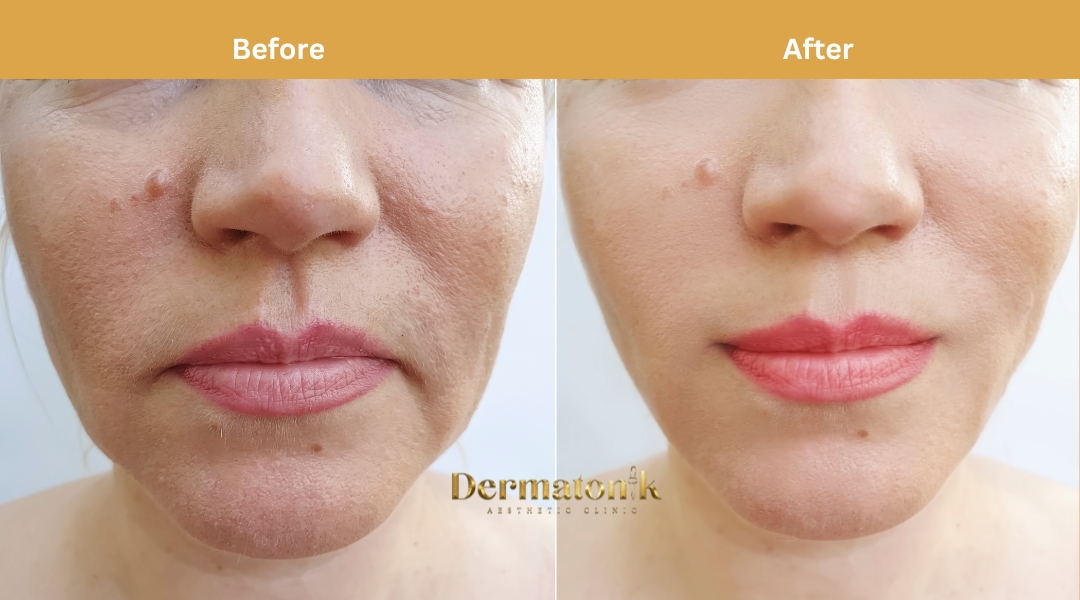
Pigmentation has more than one cause, and the causes need different answers. Which is why the plan starts with an in-clinic skin analysis, not with a protocol chosen in advance.
Pigmentation is a description of what you can see, not a diagnosis. Two people with similar-looking marks can have entirely different underlying causes — and treating them the same way is how patients end up worse off.
Sun-driven darkening, hormonal patterning, and marks left behind after inflammation all look broadly similar in the mirror, but they behave differently. Some respond well to resurfacing. Some are made visibly worse by it. Depth matters too: surface pigment and deeper dermal pigment do not respond to the same approach.
This is the honest reason we will not name a protocol before seeing your skin. An analysis establishes what type of pigmentation you have, how deep it sits, and how your skin is likely to react — and only then is a plan built.
Ultraviolet exposure prompts pigment-producing cells to increase output. In Bangalore this is a year-round factor, not a seasonal one, and it undoes treatment faster than anything else.
Pregnancy, hormonal medication and thyroid changes can drive a distinctive symmetrical patterning that behaves very differently from sun damage and needs a more cautious approach.
Skin that has been inflamed — by acne, by injury, or by an over-aggressive treatment elsewhere — can leave darkened marks behind as it settles.
Your analysis decides which of these is appropriate, in what order, and at what strength. Most plans combine more than one, staged over time.
Skin renewal — results shown are from Dermatonik's skin-renewal protocols and may reflect a combination of treatments.
Photographs shared with patient consent. Individual results vary; your clinician will set honest expectations at consultation.
Dr. Saeema Shiraaz examines the pattern, depth and likely cause of your pigmentation, and reviews sun exposure, hormonal factors and anything previously tried.
What is appropriate, in what order, and what it will cost is set out before anything begins. You will be told plainly if something is not going to help you.
Treatment is staged rather than rushed. Strength is built gradually, because pigmentation punishes an over-aggressive start with rebound darkening.
Aftercare is explained before you leave, and we review how your skin has responded before deciding the next step.
Dr. Saeema Shiraaz — cosmetologist, and the reason patients stay. Every treatment plan at Dermatonik is built around her judgement, not a sales target.
Every protocol is planned and supervised by Dr. Saeema Shiraaz — no junior staff experimenting on your skin.
We recommend what works for your skin, not whatever's trending — and we'll say so if a treatment isn't right for you.
Honest timelines, real costs, and no pressure to buy packages you don't need.
Three clinics offered me the same laser package without looking properly. Here they actually worked out what kind of pigmentation it was first.
Lakshmi V.
Pigmentation patient
What patients usually ask before their first visit.
Because the same-looking patch can have different causes and depths, and the wrong choice can darken skin further. Naming a protocol before an assessment would be guessing with your face.
We would be careful with that word. Pigmentation can often be visibly reduced and managed well, but it is a condition with ongoing drivers — particularly sun exposure — rather than something switched off for good.
It can, especially where sun exposure or hormonal factors continue. Maintenance and daily sun protection are part of the plan, and any clinic that leaves that out is setting you up to be disappointed.
Often, yes — but the first step is usually to calm the skin rather than treat it further. Bring details of what was done, as that genuinely changes the approach.
More than any single treatment. Without daily broad-spectrum protection, results are undone faster than they can be built, whichever protocol is used.
Yes, with the right selection and a cautious build-up. Deeper skin tones carry a higher risk of post-inflammatory darkening, which is exactly why strength is staged rather than pushed.
Tell us a little about what you'd like to address. Dr. Saeema Shiraaz will review your message and the team will confirm a time that works for you.
2nd Floor, 1655, 27th Main Road, opp. NIFT College,
1st Sector, HSR Layout, Bengaluru 560102
By appointment — in clinic or online consultation
Continue the conversation there and the team will confirm your slot shortly.